
Rev. Prof. E. Kingsley Kwabena Larbi – Founding President (1998–2003)
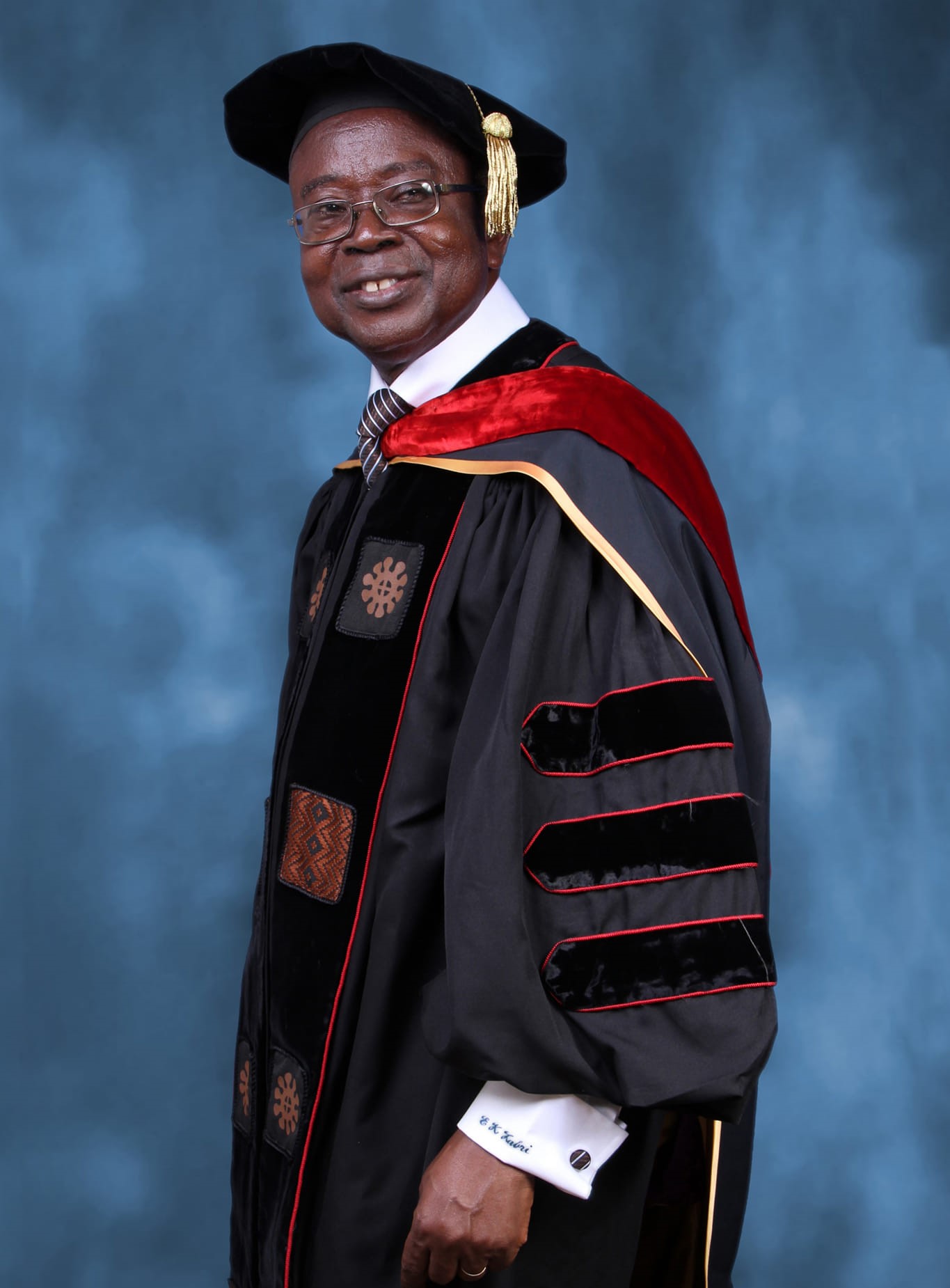
The transformation of Central University from its origins as Central Bible College in Akokofoto, Dansoman to a fully-fledged chartered university is a remarkable story of faith, vision, and purposeful leadership. At the forefront of this journey was Rev. Prof. Emmanuel Kingsley Kwabena Larbi, the founding President of Central University College.
Appointed in November 1998, Rev. Prof. Larbi provided the foundational leadership required to transition the institution from a Bible college to a multidisciplinary university college. Under his direction, the University identified and renovated the Sunkwa Lodge, an abandoned two-storeyfacility located in Mataheko, near Kaneshie, which became the institution’s first major campus in Accra. This milestone, achieved in September 1998, marked the physical and symbolic beginning of Central University College’s growth trajectory.
Strategic Growth and Academic Expansion
Rev. Prof. Larbi served as President of Central University College until July 2003, during which time he distinguished himself as a pioneering leader who combined academic rigour with spiritual purpose. Drawing on the theological legacy of the Central Bible School, he led the establishment of the School of Theology and Missions (STM). Recognising the need for broader academic offerings, his leadership further facilitated the creation of the School of Business and Management Administration (SBMA). This strategic expansion laid the foundation for the University’s development into a comprehensive institution of higher learning.
Innovative Programmes to Broaden Access
To compete with established public universities such as the University of Ghana, University of Cape Coast, and Kwame Nkrumah University of Science and Technology, Prof. Larbi introduced evening programmes tailored to working professionals. This bold and forward-thinking initiative significantly increased access to tertiary education and sparked a surge in enrolment—from about 300 students to over 1,000 in less than two years.
Scholar, Administrator, and Nation Builder
A respected scholar of theology, Rev. Prof. Larbi holds a Doctor of Philosophy (PhD) in Theology/Theological Studies from the University of Edinburgh (1991–1995). He is recognised for his enduring contributions to theological education, academic administration, and leadership within faith-based private tertiary institutions. He currently serves as Founder and Chancellor of Regent University College of Science and Technology.
Emeritus Prof. V.P.Y. Gadzekpo – President (2004 – 2012)
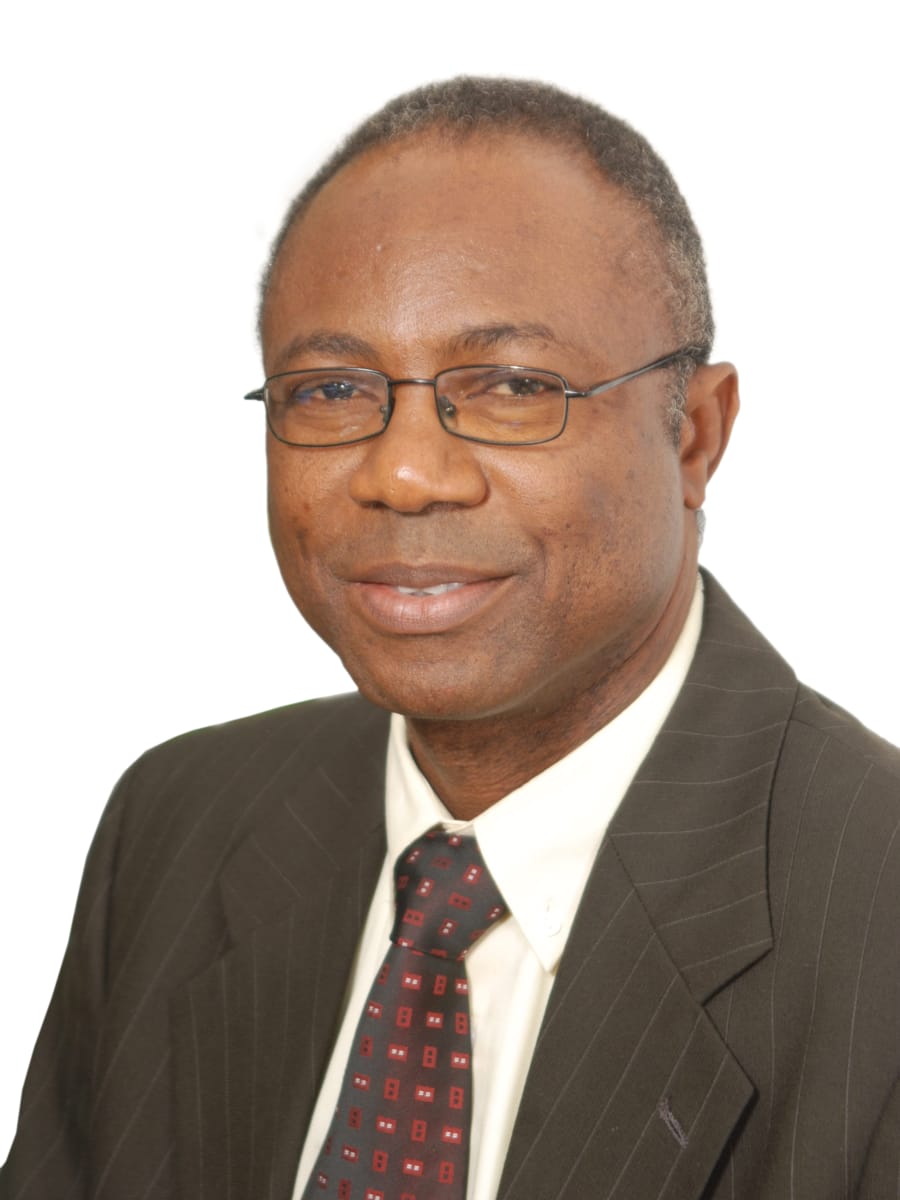
By 2004, Central University College had begun shaping its academic culture and identity. It was at this pivotal juncture that Emeritus Professor Victor Patrick Yao Gadzekpo, a distinguished academic from the University of Cape Coast, assumed leadership as President. His appointment marked the beginning of a new chapter, characterised by bold academic expansion and infrastructural development.
Expanding the Horizon
Calm, deliberate, and visionary, Prof. Gadzekpo steered the University College into new territory, introducing a range of science and applied programmes. Notable among these were Pharmacy, Nursing, Architecture, and Engineering—disciplines that broadened the university’s academic scope and attracted a new generation of students and faculty.
Moving to Miotso
Perhaps the most visible legacy of his leadership was the relocation to the University’s campus at Miotso, near Prampram. Prof. Gadzekpo championed the idea of a permanent home for Central University College, envisioning a serene, expansive environment conducive to academic excellence. He quite literally and figuratively led the way to Miotso, overseeing the transition to the current site, a significant milestone in the institution’s infrastructure development.
An Accomplished Academic Leader
Emeritus Professor Gadzekpo is a renowned Professor of Analytical Chemistry at the University of Cape Coast. He holds two undergraduate degrees from UCC—a Bachelor of Science in Educationand an Honours Bachelor of Science in Chemistry (1971–1977). He proceeded to the University of Washington in Seattle, USA, where he earned his MSc (1979–1982) and PhD (1982–1984) in Analytical Chemistry.
Joining UCC as a Senior Lecturer in 1987, he rose rapidly through the ranks, attaining the position of full Professor in 2000. During his time at UCC, he served in several roles: Hall Counselor, Coordinator of the Computer Centre, Head of the Chemistry Department, Vice Dean and later Dean of the Faculty of Science, among others.
Contributions to Scientific Knowledge
In 1984, Prof. Gadzekpo developed a new method for the Determination of Selectivity Coefficient, known as the Matched Potential Method. This method was officially adopted in 1994 by the International Union of Pure and Applied Chemistry (IUPAC)—a testament to his global contribution to the field of chemistry.
Recognition and Transition
In recognition of his academic and scientific achievements, he was elected to the Ghana Academy of Arts and Sciences in 2004. Beyond the world of academia, Prof. Gadzekpo is also known for his passion for flower gardening. After leading Central University College through a transformative phase, he handed over leadership to Professor Kwesi Yankah, continuing the institution’s journey of growth and excellence.
In May 2021, the School of Physical Sciences in collaboration with the Department of Chemistry at the University of Cape Coast honoured the Emeritus Prof. Gadzekpo for his years of remarkable service and contributions to the University.
Emeritus Prof. Kwesi Yankah – President / Vice Chancellor (2012–2017)
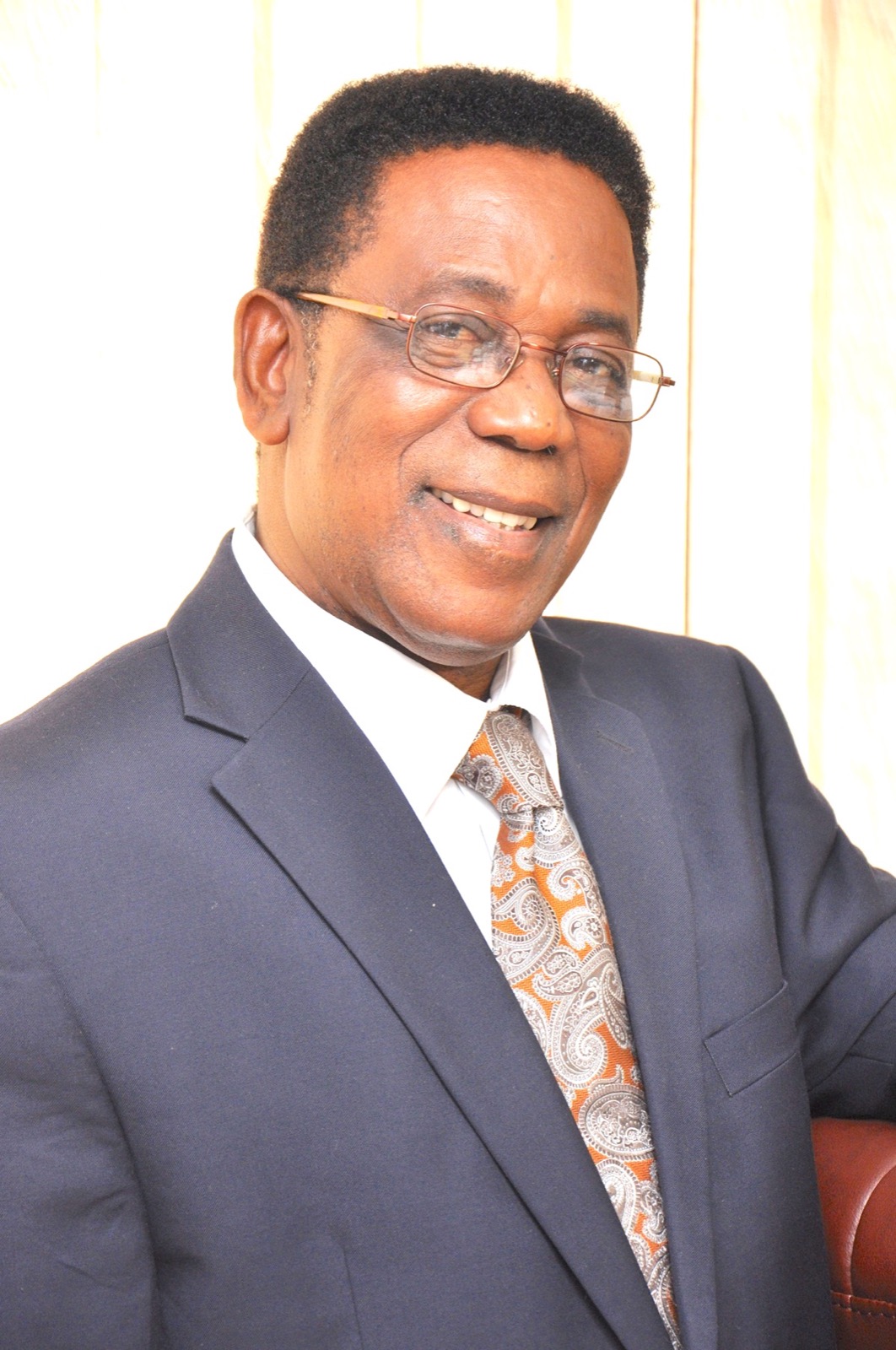
A celebrated scholar and academic administrator, Emeritus Professor Kwesi Yankah is a renowned Professor of Linguistics and Oral Literature, with specialization in the ethnography of communication. He was inducted into the Ghana Academy of Arts and Sciences in 1999 in recognition of his scholarly distinction.
Prof. Yankah devoted the greater part of his academic career to the University of Ghana, where he served in several senior leadership positions. These included Head of the Department of Linguistics, Dean of the Faculty of Arts, Dean of Students, and Pro Vice-Chancellor for Academic and Student Affairs.
Early Association with Central University
His formal relationship with Central University began in 2005 when he was invited to serve on the University’s Board of Regents. This role provided him with a unique vantage point into the institution’s governance and operations, and further deepened his understanding of Ghana’s private tertiary education sector—an area he had oversight of as Pro Vice-Chancellor at the University of Ghana. This dual exposure positioned him as a respected advocate for reform in the private higher education space.
Transition to Full University Status
In 2012, Prof. Yankah was appointed President of the then Central University College, succeeding Prof. Victor Gadzekpo at the end of his second term. Upon the completion of his initial four-year term in 2016, he was reappointed. That same year, Central University achieved a major milestone with the conferment of the Presidential Charter, elevating its status to a fully autonomous university. With this development, Prof. Yankah became the institution’s first leader to bear the title Vice Chancellor.
Advancing Institutional Visibility and Growth
Prof. Yankah’s tenure marked a period of strategic growth, increased visibility, and international recognition. Central University earned several notable accolades, including: Best University Award (2014) from the European Business Assembly, Oxford, UK and Ghana’s Head of State Academic Award (Tertiary) in 2015.
He also oversaw the establishment of the Central University Kumasi Campus, located on the premises of the Calvary Charismatic Centre (CCC), Ayigya, thereby expanding the University’s geographical presence beyond Accra.
Distinguished Speaker Series
In 2013, Prof. Yankah launched the Distinguished Speaker Series, an enduring academic initiative that created a platform for prominent thought leaders across academia, governance, and industry to discuss national and regional issues. The inaugural lecture was delivered by Prof. Adjigun Agbajeof the University of Ibadan, followed by presentations from leading figures including Dr. Mahamudu Bawumia, Dr. Kwesi Botchwey, and Anas Aremeyaw Anas.
Call to National Service
In March 2017, Prof. Yankah’s tenure as Vice Chancellor came to an end following his appointment as Minister of State in charge of Tertiary Education in the Government of Ghana. This appointment served as national recognition of his immense contributions to the higher education sector. Following his exit was the appointment of Prof. Bill Buenar Puplampu.
Publications and Recognitions
Prof. Yankah is the author of several acclaimed scholarly works, including the widely cited Speaking for the Chief: Okyeame and the Politics of Royal Oratory, a text used in universities across the world. His doctoral dissertation at Indiana University, USA, earned the Esther Kinsley Award for Outstanding Doctoral Dissertation. In 1996, the Ghana Journalists Association honouredhim for authoring the longest-running newspaper column in the history of Ghanaian journalism.
Emeritus Professor Kwesi Yankah continues to contribute to academia and national development as a distinguished member of faculty at Ashesi University.
Professor Bill Buenar Puplampu – Vice Chancellor, (2017–2025)
Academic Background and Professional Credentials
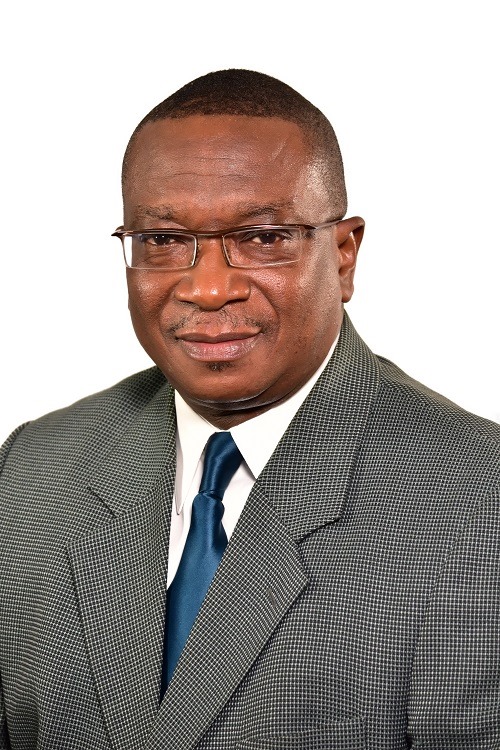
Professor Bill Buenar Puplampu is a distinguished organisational psychologist, academic leader, and governance expert with a career spanning higher education, consulting, and public policy in Ghana, the United Kingdom, and internationally. He holds a BA (Hons) in Psychology from the University of Ghana (1985), an MSc in Occupational Psychology from the Polytechnic of East London (1990), and a PhD in Organisational Behaviour from the University of East London (1994). He is a Chartered Psychologist and an Associate Fellow of the British Psychological Society, specialising in Occupational and Organisational Psychology.
Early Life and Educational Foundations
Born into a family deeply rooted in education, public service, and ministry, Professor Puplampu was shaped by strong traditions of teaching, preaching, and scholarship. His early education took place at South Labadi Experimental School, followed by Presbyterian Boys’ Secondary School (Presec, Legon). These formative years were influenced by committed educators and faith-based youth movements that shaped leadership values among Ghanaian youth in the 1970s and 1980s. He entered the University of Ghana in 1981 to study Psychology with Sociology, where his interest in human behaviour and organisational life was further nurtured by family influences and respected academics in the Psychology Department.
Postgraduate Training and UK Experience
In pursuit of advanced professional training, Professor Puplampu moved to the United Kingdom in the mid-1980s. He undertook postgraduate studies at the North East London Polytechnic—later the Polytechnic of East London and subsequently the University of East London—completing his MSc in 1990 and PhD in 1993/94. His years in the UK (1985–2005) coincided with major reforms in British higher education and were instrumental in shaping his commitment to applied scholarship, accountability, and evidence-based organisational practice.
Academic Career and Time at UG
Professor Puplampu began his academic career in the UK, teaching at the University of East London and the University of Westminster. He later joined the University of Ghana Business School as a Lecturer in Management and rose through the ranks to Senior Lecturer (1998), Associate Professor (2010), and Professor of Organisational Behaviour (2014). He served as Head of the Department of Organisation and Human Resource Management, Chair of the Executive MBA Programme, and Editor of the School’s academic journal. He was instrumental in introducing Project Management as an academic pathway on the EMBA programme in Ghana.
Leadership at Central University
In September 2010, Professor Puplampu was appointed Dean of the Central Business School at Central University and later served as Vice President for Academic Affairs. In March 2017, Professor KwesiYankah’s tenure as Vice Chancellor came to an end following his appointment as Minister of State in charge of Tertiary Education in the Government of Ghana. Subsequently, Professor Puplampu was appointed Vice Chancellor. Prof. Puplampu’s tenure, which ended in August 2025, provided academic and strategic leadership during a period of institutional consolidation and national higher education reforms.
Governance, Boards and Public Policy Engagement
Professor Puplampu has served on numerous boards, councils, and national committees, including financial institutions, education investment funds, regulatory bodies, and state reform task forces. He contributed to reforms in Ghana’s State-Owned Enterprises sector, which culminated in the passage of the SIGA Act (Act 990 of 2019). He also served on national education oversight and development planning institutions.
Teaching, Research and International Engagements
A committed teacher and scholar, Professor Puplampu has taught extensively in Business and Psychology at undergraduate and postgraduate levels, supervised numerous PhD, MPhil, and MBA students, served as an external examiner across Africa, and held visiting professorships internationally. His research focuses on leadership, employee motivation, organisational culture, work values, corporate responsibility, and institutional development in Africa. He has over 100 scholarly publications and has led and participated in major internationally funded research projects.
Professional Recognition and Intellectual Contribution
Professor Puplampu is a Fellow of the Ghana Academy of Arts and Sciences and a graduate of the German DAAD/CHE International Deans’ Programme. In 2023/24, he was honoured by the University of East London as one of its 125 most impactful alumni. His work consistently emphasises the application of psychological insight to organisational effectiveness, national development, and meaningful work life.