Central University has taken a significant step towards strengthening its international engagement following a strategic meeting with the University of Newcastle, Australia. The engagement, facilitated by Central University’s International Programmes Office (IPO), took place on Monday, 12 January 2026, and focused on exploring opportunities for academic collaboration, student exchange programmes, and broader institutional partnerships between the Newcastle Business School and the Central Business School.

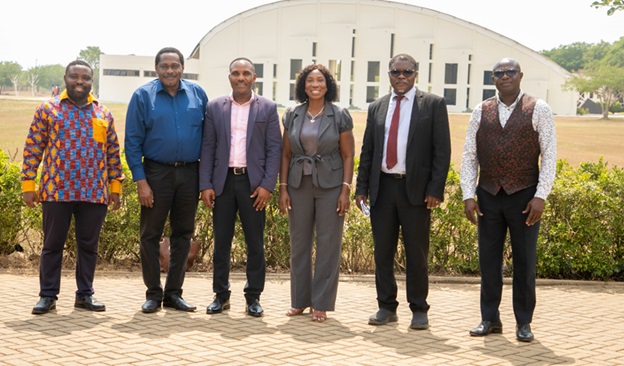
The University of Newcastle was represented by Prof. Frank Agbola, Professor of Economics and Africa Academic Lead at the Newcastle Business School. He engaged Central University leadership in forward-looking discussions aimed at creating innovative and student-centred academic pathways.
The Central University delegation included Prof. Evans Sokro, Dean of the Central Business School; Dr. Kingsford Kissi Mireku, Head of the International Programmes Office; Mr. Emil Afenyo, Director of Planning, Sustainability and Special Projects; Dr. Ruby Melody Agbola, Head of the Department of Management; and Mr. Paul Agyaye from the Quality Assurance and Compliance Team.

Discussions centred on collaborative degree structures, joint degree and master’s pathways, and other flexible progression models designed to enhance international exposure and global competitiveness for students. These initiatives are expected to enrich academic experiences, expand cross-border learning opportunities, and support the development of globally relevant skills.

The engagement marks the beginning of a promising collaboration between Central University and the University of Newcastle. As the University continues to pursue strategic global partnerships, it remains committed to initiatives that broaden academic horizons, strengthen institutional capacity, and empower future-ready graduates for leadership and service in a global context.
Central University remains committed to building impactful international partnerships that produce future-ready graduates and contribute meaningfully to national and global development.
As discussions progress, both institutions look forward to deepening collaboration in ways that advance academic innovation, cultural exchange, and sustainable global engagement.